The Higher Seat
Namaste!
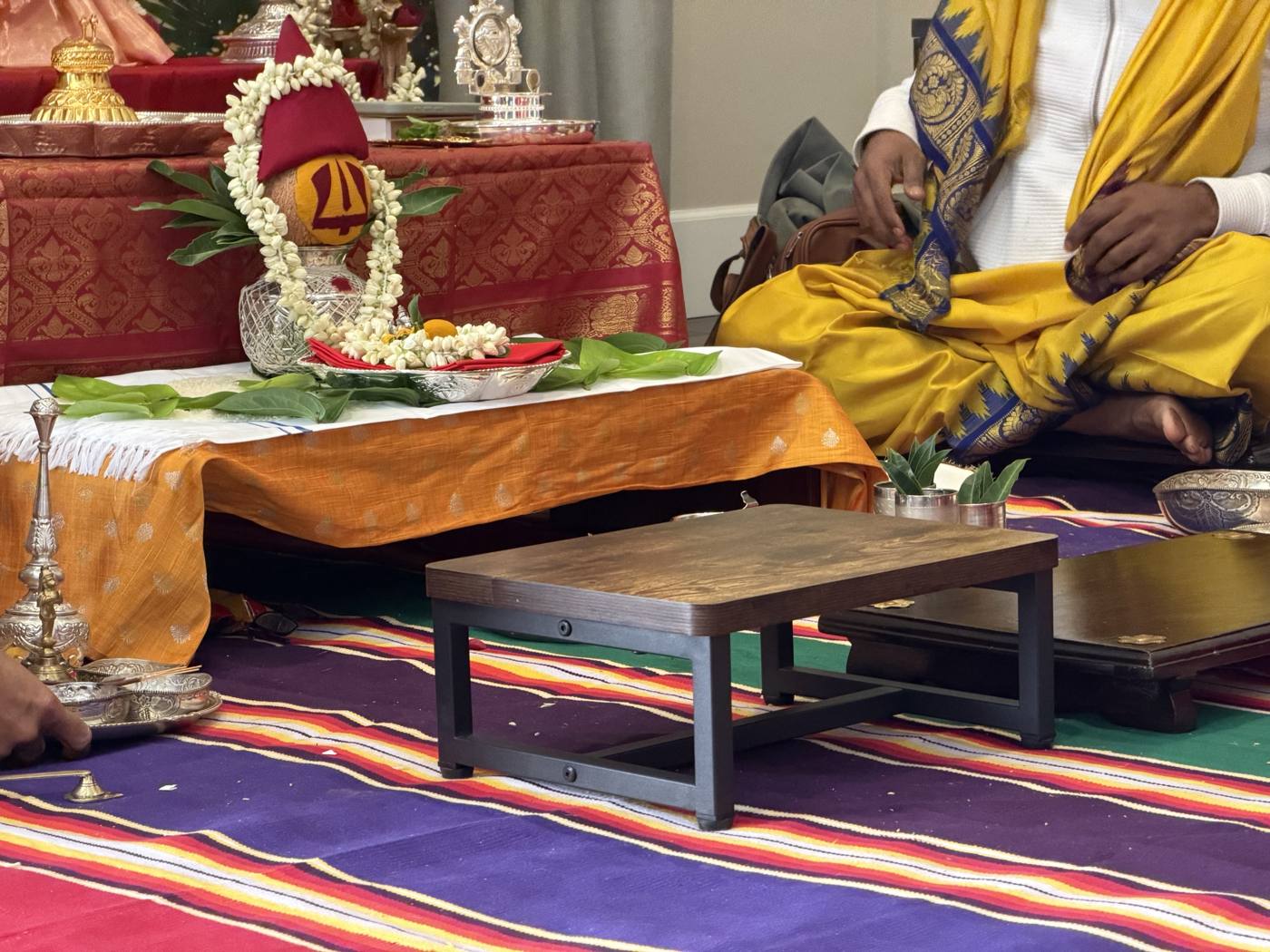
A friend recently performed Srinivasa Kalyanam at home. The kalasam was dressed in red, strings of jasmine framed the coconut, the silver lamps were glowing, and the priest sat ready in his yellow veshti. She had brought along a stool to sit on, a little higher than the low wooden seat her husband would use. Just before they began, a bit unsure, she asked the priest whether that was all right.
He did not even pause. "Of course! Women are always on a higher pedestal in our culture."
It was said as a matter of fact, the way one says the sun rises in the east. That simplicity is what stayed with me.
Not a favour, a starting point
Our tradition does not hand respect to women as a modern concession. It begins there. The Taittiriya Upanishad, sending the student out into life, says मातृदेवो भव first, before father, teacher or guest. The Manusmriti puts it plainly:
यत्र नार्यस्तु पूज्यन्ते रमन्ते तत्र देवताः। यत्रैतास्तु न पूज्यन्ते सर्वास्तत्राफलाः क्रियाः॥ 3.56 ॥
Where women are honoured, there the devatas rejoice. Where they are not honoured, all rituals bear no fruit.
Note the second line. Even the grandest puja fails if the woman of the house is not honoured. The priest was simply stating the rule of his own profession!
Look at the Lord she was worshipping
The ritual itself teaches the same lesson. His very name is Srinivasa, the abode of Sri. Lakshmi does not stand behind him; she lives on his chest, and devotees approach the Lord through her. We say Sita Rama, Radha Krishna, Lakshmi Narayana, Gauri Shankara. Her name comes first, every time.
In Vedic karma, too, the grihastha does not perform alone. The wife is the sahadharmacharini, the one who walks the path of Dharma with him. A higher seat for her does not lower him. It completes the yajna.
The pedestal in daily life
Of course, the pedestal is not really about a few inches of wood. A stool is easy. The harder part is the attitude behind it:
- At home, seeing the work of mother and wife as seva, not as something taken for granted.
- At the office, giving a woman colleague's idea the same hearing, and the same credit.
- In the family, investing in a daughter's education and dreams as fully as a son's.
A culture is measured not by the verses it recites but by how naturally it lives them. That priest gave a two second answer. May we live it every day.
Hari Om!
This article is researched and written by AI based on prompts and inputs given and finally approved by Rajesh Sengamedu.
Comments
No comments yet. Be the first to share your thoughts.
Add a comment
Every comment is read and approved by Rajesh before it appears here. Your email is never shown.